No time to read? No problem. I’ve added an audio version, so I’ll read it to you!
At the dawning of this New Year, what do you want for your life in 2026?
As the “new year” approaches, we’re inundated with messages telling us how to “change things up – or set goals” to have a better year than last year.
It might help to think of life as a number’s game. 4,264 doesn’t sound like a big number, does it? 4,264 is the number of weeks in the average lifetime.
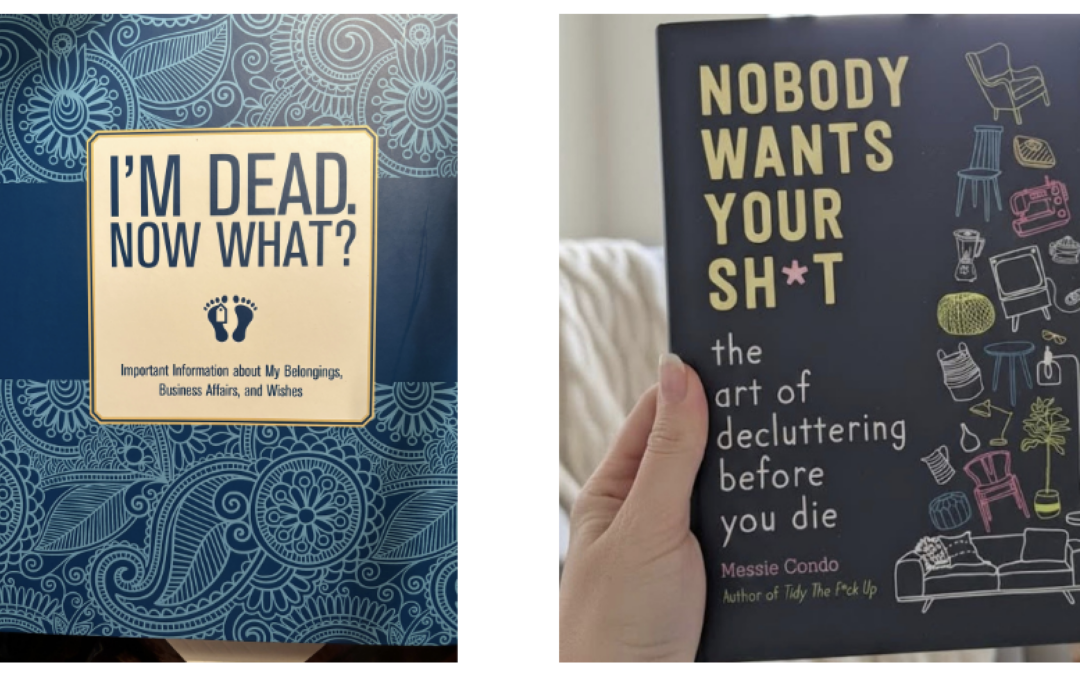
I’m blessed to have things come into my life when they’re likely to make the most “ah-ha” moment that can invoke change… things like those 2 books in the featured image!
Life passes in the blink of an eye, so think about balancing the books of your life every day – because you never know when that day could be your last. Don’t leave a mess for your loved ones to clean up.
As you’re heading into this “New Year,” try seeking some self-discovery over self-improvement. Seeking self-improvement can sometimes turn into just another way for us to beat ourselves up.
There’s nothing inherently wrong with wanting to better ourselves, but it can become a pitfall. You might have the discipline to attain all the milestones you think you need to be happy. But without “discovering yourself,” you might build a world that isn’t actually for you.
That’s the difference between self-discovery and self-improvement. Self-discovery is all about uncovering who you are and what you truly want from life. It’s about finding the principles, passions, and goals that are uniquely rewarding and fulfilling to you.
Self-discovery begins with using our brains – all 3 of them! We have our head brain (our thoughts), our heart brain (our emotions), and the gut brain (our nervous system).
- Our head is our “human” brain that controls higher-order functions like reasoning, planning, and problem-solving.
- Our heart is our “mammalian” brain that governs our emotions and our ability to form social connections.
- Our gut is our “reptilian” brain, associated with our nervous system, has over 100-million nerve endings that produce 90% of our body’s dopamine & serotonin chemicals – promoting feelings of pleasure, motivation, and satisfaction.
We use these “brains” as a framework to describe our experience of the world. You can hear it in our language, when we use phrases like: “I’m stuck in my head,” “My heart’s not in it,” or “I’ve got a gut feeling.”
The practice of mindfulness and Tai Chi is teaching me the importance of “being in the present moment,” and taking the time to listen to my heart and feel my gut. As a Mindfulness Mentor, my mantra has become: “It’s not ‘what’ we do in life, it’s ‘how’ we do it that matters.” This can be a foreign concept to us humans who are programmed to “provide and perform” from the time we’re born.
Imagine what your life would be like if you were able to take pleasure in every single moment.
How are you reading this article right now? There might be a more pleasurable way to experience it. Perhaps it’s being less rushed, or noticing the sensations in your body and feeling how each word lands in your system.
Think of the emotional stages-of-development for an infant. A baby can cry without any shame or resistance – their emotions are completely impersonal. As we get older, we’re taught to repress certain feelings like anger and sadness. Through adolescence, we start to have big emotional experiences where emotions seem to “take control” of us.
Then, we start trying to manage our emotions, and that can become a form of repression. We are taught to ignore them, avoid them, or distract ourselves.
Many people don’t want to feel emotions because they think it will hurt. It’s actually the resistance to the emotion that can be painful.
When our emotions are allowed to flow freely, they can’t control us anymore! Instead, there can be a deep enjoyment of them. The definition of pleasure is the awareness of sensation moving in your body. The more pleasure we can feel, the more our nervous system knows it is safe. And if we feel safe, we can connect with the pleasure that is right here, right now.
Like anything else, your capacity for pleasure is something you can grow into. And as you learn how to welcome pleasure, your ability to have pleasure grows and grows.
Are you ready to chart a course that is genuinely yours – that brings joy, meaning, and purpose into your life? Create a life you love – a life you’ll never need to escape from! I’m always here when you want some help > https://calendly.com/mentalhealthfa
Tanya MacIntyre is a Certified CBT Specialist, Mental Health Fitness Trainer, and owner/operator of Red Roof Recovery (RRR) & its training division Mental Health Fitness Alliance (MHFA).
DISCLAIMER: This content is not intended to constitute, or be a substitute for, medical diagnosis or treatment. Never disregard medical advice from a doctor, or delay in seeking it, because of something you have watched, read, or heard from anyone at RRR or MHFA.